Interview with Abbot Mark Patrick Hederman, OSB
 Opeyemi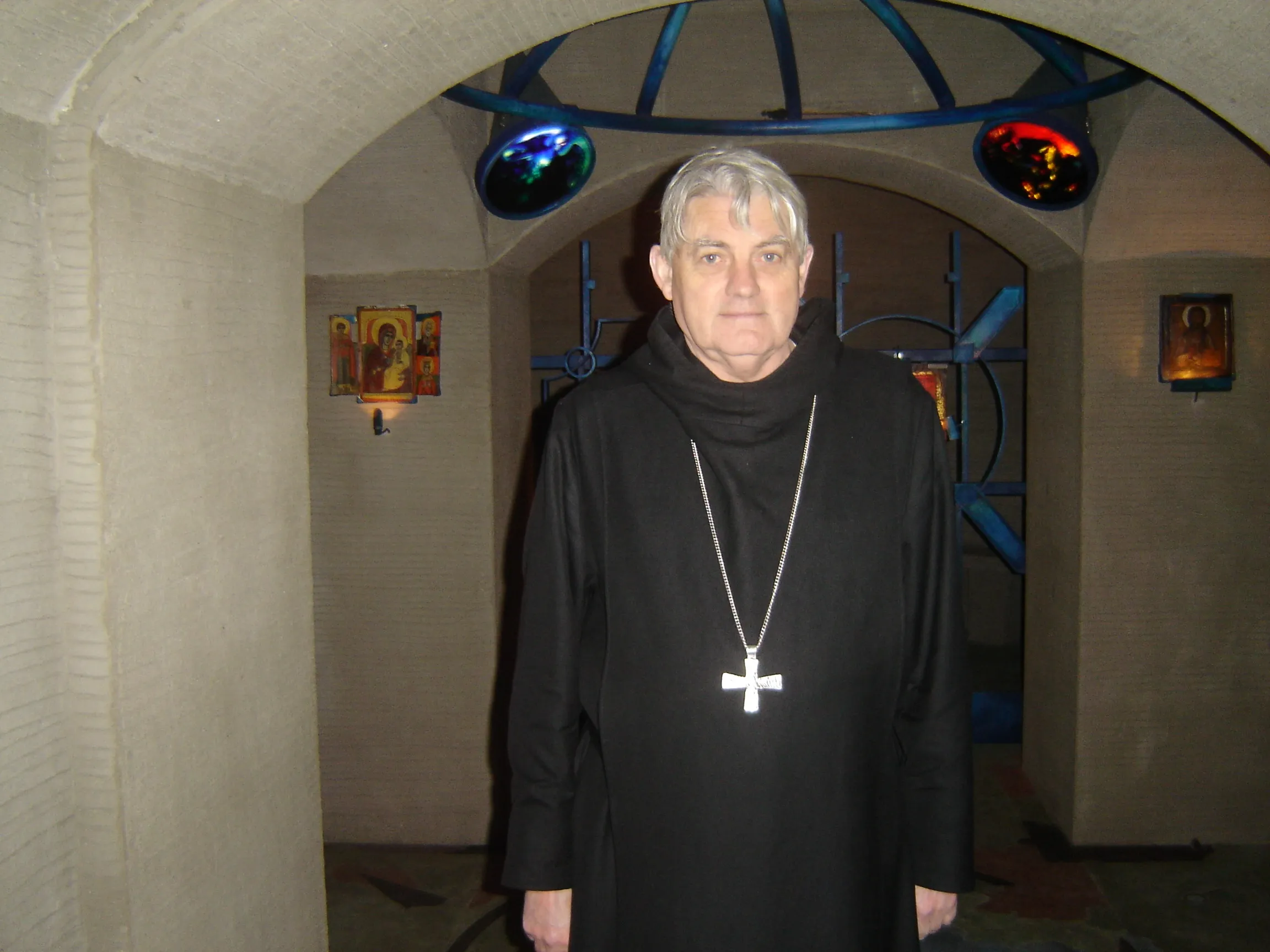
Born in 1944 in Ireland, Abbot Hederman attended St Gerard’s School and later Glenstal Abbey. He briefly studied philosophy and literature at University College Dublin before moving to Paris to pursue further studies in philosophy and theology, earning a PhD in the philosophy of education. He experienced the 1968 student revolution in France, and later lectured at Boston University. From 1992 to 1995, he served as a formator at the National Missionary Seminary of St Paul, Abuja. He was elected abbot and ordained a priest in 2008 and is now retired. He recently visited Nigeria and was interviewed by Fr Martin Yina, MSP, Editor of The Catholic Ambassador, on October 18, 2025.
Here are edited excerpts of the interview
EDITOR: Let me begin by asking that our audience get to know you.
ABBOT: I'm Mark Patrick Hederman. Mark was the name I was born with, but when I joined the monastery at age 19, they said I had to change my name because I had to become a new person, and there was already a Mark in the community. So, they gave me the name Patrick. I have been a monk of Glenstal Abbey in Ireland for 60 years. Not only that, they have a school, and I was there from age 12. So, I have been there for 72 years, and I'm now 81. That tells you how much of my life has been in that place, but it doesn't mean I didn't travel a lot from the monastery. I have been the headmaster of the school and also the Abbott. We have an 8-year tenure for the abbot. When I joined the monastery, I didn't want to be a priest. There was a whole movement then that a monk was not meant to be a priest but different, like a prophet. But when I was elected abbot, Rome decided not to allow me be a major superior without being ordained a priest. So, I had to say then that the Holy Spirit is asking me for this, and I said yes. Because the Church can fast-track easily, after a month, I was ordained on the 8th of December 2008.
EDITOR: Thank you very much. You became a monk at 19. Could you share a bit of your vocation story with us?
ABBOT: My mother was an American. She wasn't Irish. My father was a farmer in Limerick. My mother came to Ireland to study at the university. She was invited by his sister to the farm for a weekend. When she arrived, he fell in love with her as she was getting out of the car. So, she was American, and she didn't approve of Irish education. She didn't allow me to go to school until I was 9 years old. The farm was a horse-training place, and I was riding all the time. I used to go to a particular place where I was connected with God. It was a little hill beside where we lived. And every time I went there, I used to meet God and discuss the running of the universe, which I thought he wasn't doing a great job of. I decided to be one of his helpers. This is what I did before I was 9 years old… It was a presence more than anything else. So, all I wanted to do was continue that relationship, and when I went to school, the monastery looked like a place that would be good for that. And the people in the monastery were telling me, oh yes, that's the right thing. There were 5 of the boys at that school who came in with me, and they all left within 2 years. I was the only one who stayed. Since the school was founded, they only had 5 people who joined the monastery. It was an ordinary secular school, but it just happened to be run by the monks.
EDITOR: May I return to the issue of your not wanting to be a priest for a long time. Did you say it was due to the concept, then?
ABBOT: Actually, it had to do with Irish priests that I didn't like. Every single boy in Ireland in the 1950s and the 1960s wanted to be a priest, and every mother of every boy wanted them to be a priest, and we had more priests than any other seminary in the whole world. We were supplying priests everywhere, and it was mostly very poor people who wanted to get an education and social status, because as a priest, you were regarded as being almost a saint, and people were bowing down to you. So, I didn't like that at all. I thought that was wrong. So that was part of it; I despised them. The other part of it was that I didn't feel that my relationship with God had to do with the priesthood. I was more like a scout in the army, sent on a mission but not to be part of an institution. Also, in Ireland at that time, priests were not allowed to go to the theatre. It was in the Maynooth statutes. They were regarded as perfect, and there were fears that they would be contaminated. And the plays, especially those in American cinema, were all censored. So, I didn't like that side of it either. I wanted to go to the theatre. I loved the theatre. So, it wasn't one single reason, but there were a number of them.
EDITOR: When exactly did you first come to Nigeria? And what was your impression, then, and your impression now?
ABBOT: I came in 1992. John Joyce was making all kinds of arrangements for this strange person that he wanted to bring. So, it was in October or November that I finally arrived in Lagos, and I never in all my life got such a shock as when I landed at the airport in Lagos. Just getting out of the plane, my passport, wallet, and everything were taken, as I came through a huge number of people. The people knew where it was, and if you paid enough money, you got it back. Anyway, it was quite a terrifying experience, landing in Lagos airport at that time; I had never seen such huge crowds.

This time, I landed at Abuja Airport, and I never in my life got such a shock; it's the most luxurious airport. Whereas other airports around the world are done with cement, they have it in marble. It's incredible the difference, because Abuja was not even on the cards at that time. It was just being built, and nobody wanted to go there. When I first came, it was the heat and the crowds and everything that were new to me. But when I met the students in Gwagwalada, I fell in love with everybody. They were so lovely, and intelligent because of the rigorous entrance requirements for Iperu-Remo. I don't think I ever taught a group of people who were so bright and voracious. They wanted to learn every single possible thing that I knew. They would suck you dry trying to get as much information out of you. They were so like brothers, it was wonderful. It was a really beautiful experience for me. And I made friends, because the first thing I was told by people who were giving me information before I came here was that you're a European; don't ever believe that you will make real contact with a Nigerian. They will never let down their defenses, they will always be suspicious of you, and you may think that you have made friends, but it will never happen. So, forget about that. Just do your teaching and get out. This was what they were saying to prepare me. Whereas I can say now at the age of 81 that that is quite untrue and that I made some of the best friends I've ever had in my life while I was here, and still, this time, I was with these people for a week, and the sharing that we had during that week, I've never experienced it anywhere else. It's so full of trust and honesty, it's just brilliant. I really did love being in the seminary during the years I was here.
EDITOR: What is your take on the MSP going back to Ireland as missionaries?
ABBOT: That's fascinating. I was delighted when John Anih, MSP came for a year, because there are no priests in Ireland now. The real difficulty for people in all countries about other Nigerian priests is that they cannot understand them speaking English. And they are inclined to give too long sermons. And people are not used to having long sermons. But the great thing about those here is that they are taught how to speak English beautifully. So, that is the difference. That's why the Bishop of Armagh at the time from Northern Ireland, who was also the Cardinal, had a contract for the number of priests coming from here to there. Most of them, especially the ones going to America now, were admired because they are better English speakers than the Americans. So, nobody is going to church anymore in Ireland. It's to do with baptisms, marriages, priests anointing people, etc. It's a completely different scene now. And what's interesting is that Catholicism in Ireland used to be for the working-class people. Now, it's the middle-class money people who have adopted Catholicism, and pretty conservative Catholicism. They are the ones maintaining the church financially, so that they're very particular about what a person says. They want you to talk about what suits them rather than what you think they need to hear. And because all the people here have this Irish influence, because the Irish were the ones who established the Church in Nigeria. The Irish regarded Nigeria as their pet project. I never saw a priest more like an Irish priest than Msgr Godwin Akpan. I never saw Msgr Akpan without his soutane, with all 33 buttons buttoned. He also told me that the only things the Missionaries of St Paul needed to go on mission were their rosary, their breviary, and their Mass kits, and they didn't need to know the language or need to know anything about the culture that they were going to. That's exactly what the Irish were doing. So, the number of priests coming from Nigeria looked like replicas of Irish priests, and Irish priests have an emperor syndrome, that once they're in charge, look out. So that dominating attitude is what killed the church in Ireland, and we have nothing left now.
EDITOR: But do you think the Church in Ireland will one day be revived or it's a done deal?
ABBOT: Except it won't have any of the devotions or even the Mass. Young people have a different view of their connection with God, and what we prescribe as necessary to be a Catholic, they don't take that in at all. We had bats in our church, and we were trying to get rid of them, and this parish priest came to me. He said, I know how to get the bats out of your church. You just baptize them and confirm them, and they'll never appear in the church again (Laughter). That is, unfortunately, the situation. You're baptized, and confirmed, and after that, you never darken the door of a church again. Sometimes, if you're getting married, you might, but nowadays, most marriages are done in hotels or on a beach or something like that.
EDITOR: So, is our mission in Ireland worth it?
ABBOT: I don't know that, really. I think that the important thing about all missions now has to work out, because in America, for instance, Catholicism has become identified with republicanism, and they hated Pope Francis. They said he was a communist, and so the only thing that anybody is interested in when you're voting is abortion, that once the child is born, you can shoot them, and you can do anything else… So, I think the missioner has to say, I have my own values, whatever they are, and that's very difficult to work out. Certainly, the Irish who came here, one of the bishops used to write all the sermons for the priests so that they wouldn't preach heresy. This would be right back when they first came over, so that there was that kind of control and belief that you knew everything and these people knew nothing etc. So, I think the real truth is that a missioner has to go out wherever he's going and find out where the Holy Spirit is working there, because the Holy Spirit is working everywhere in the world. And when you find out, then you build on that.
EDITOR: Next year, the Missionary Society of St Paul will mark 40 years of its foreign missions. It began in Cameroon, the US, and Liberia. Do you have any advice for the Society?
ABBOT: What I find about the MSPs is that they have educated their students to a degree that they may be useless anywhere else….Like Bishop Shanahan, one of the big names who came here, was the most ignorant man, but he was very practical and charming to people. He connected with the Igbo people, and they were not business students or anything that he was saying, but they were interested in education. So, he said, we shall build schools and through the schools, we will make Catholics. It was because of that interest in education that the children were taught Catholicism, and then the parents all came in together, and he had thousands of people as Catholics within a very short time. To be successful as a missioner, you have to actually find out what the people really want and then sweeten the pill by putting Catholicism in with what they're striving for. When you are saying we're 40 years on the missions, it's not by numbers and by geography that you establish the value or the future of what you're doing. I think everything has to be examined very carefully. And it does require studying the actual culture of the place rather than saying, well, we have a message, and we're going to deliver it, which they don't do, but at the same time, all that has to be re-examined every 10 years, at least.
EDITOR: Thank you very much. We appreciate your coming to…
ABBOT: I know that, because I have never had such a blast of love, it only happens in Nigeria. But since I landed here, the brothers and the fathers who have met me have warmly welcomed me. Actually, there was another guy from our Monastery who came as well, Christopher, and he was absolutely stunned by the welcome I got. So, I was glad he came so that he could at least have some appreciation of it. But it's nothing compared to what I got out of it. I find it very confirming and very wonderful to feel that energy.
 Likes 0
Leave a Reply...