Special Report on the MSP Mission in the USA
 Opeyemi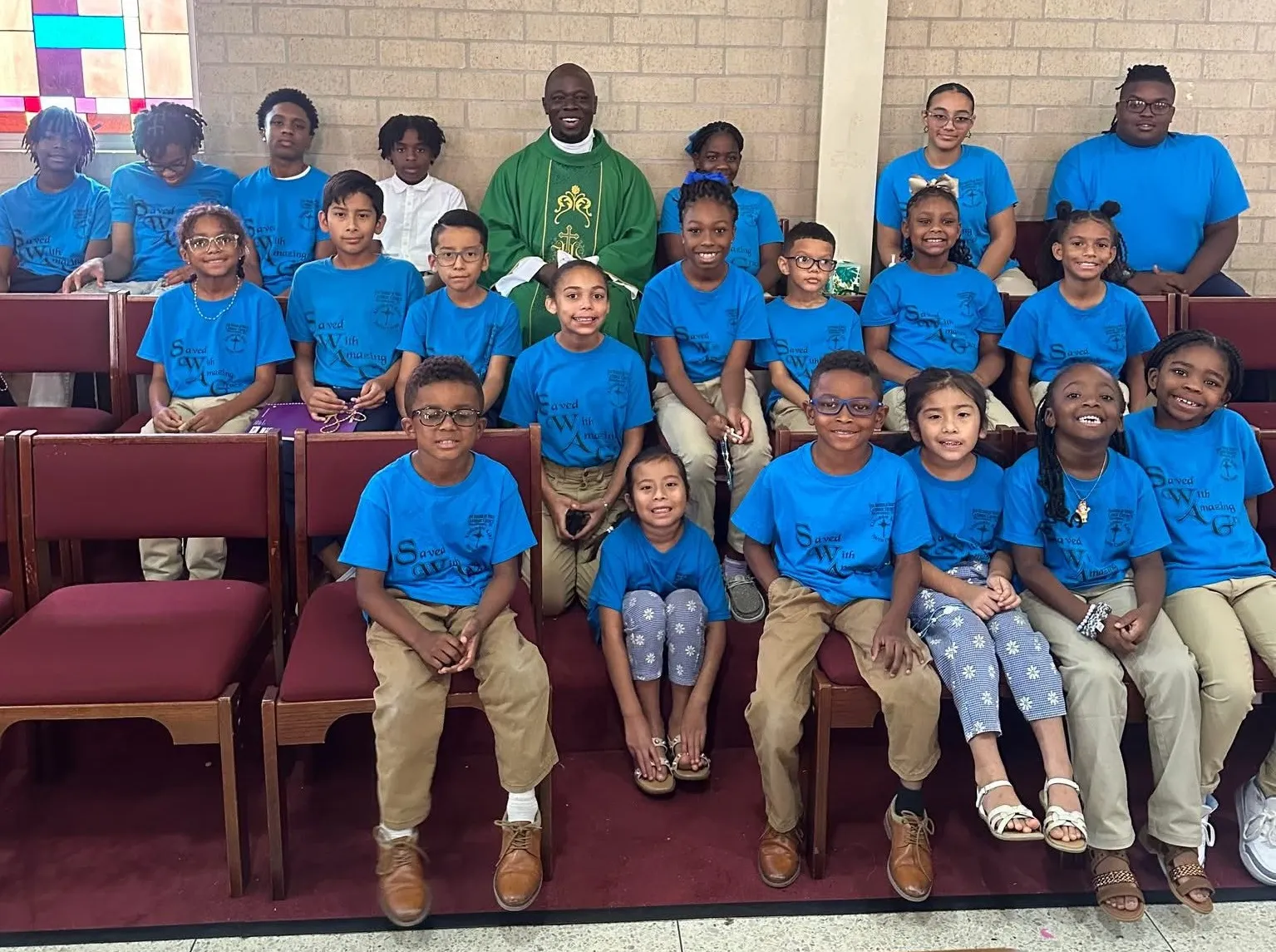
What began about 40 years ago as a partnership between the Missionary Society of St Paul and the Society of St Joseph of the Sacred Heart (Josephites) in the USA has taken firm root. The Josephites, a congregation of priests and brothers established in 1871 to serve the African American Catholic community, invited the MSP to work with them. Through that partnership, the MSP has established its presence in America and stands on its own. Today, the MSP has 65 priests ministering in about 18 arch/dioceses in the United States, and demand for its priests exceeds its capacity to provide.
How it all began
The beginning of this mission was the fruit of the initial discussion Dominic Cardinal Ekandem had started during his visit to the USA in 1977, when he expressed the hope that the Black Apostolate in America might one day become the work of the MSP. He usually stayed in the Josephite house during his visits to the USA. Then in 1981, Fr James Sheerin, SPS, the MSP Vocations/Promotion Director at the time, appealed to the Josephites for support for the National Missionary Seminary of St Paul. While responding with a donation, Fr John Filipelli, the Josephites' Superior General, also expressed interest in having the MSP come and assist in their ministries among African Americans.
This led to working out the arrangement, which had its hitches. According to Fr Filipelli, in an interview in 2005, while some members of the Catholic Bishops’ Conference of Nigeria supported the partnership, others opposed it because they did not consider the United States a mission territory. There were also fears of the negative influence of American culture on the priests sent there. Some Josephites were also opposed to such a partnership, citing what Fr Filipelli viewed as a “stereotype idea of what the African priest would be.” These notwithstanding, both congregations decided to work by faith. Following the initial agreement, Fr Peter Hogan, the Josephite Archivist, was sent to the National Missionary Seminary of St Paul in 1985 to give a 12-week lecture on the Church in the United States as a whole and Black America in particular. It was intended to prepare priests who might come to the USA for their roles in the African American apostolate by bridging cultural gaps.

On October 19, 1986, Frs Anthony Afangide, Felix Elosi, and Vincent Inametti, the MSP pioneers, arrived in Baltimore to begin their pastoral work in the USA. They were later assigned to Josephites’ parishes in Texas. The second team, Frs Paul Ofoha, Joseph Uko, and Lawrence Ebuk, arrived in Washington, DC, on November 24, 1989. They spent three weeks at the Josephite seminary for an orientation program before being assigned to work in the Josephites’ parishes in Texas. As more priests arrived, they began to take over parishes the Josephites could no longer staff and assumed responsibility for MSP parishes. The first parish handed over to the MSP as its first home in the US was St Martin de Porres, Barrett Station, in the Archdiocese of Galveston/Houston, on October 1, 1992. Fr Afangide, the Mission Superior, then became its first MSP pastor. According to Fr Afangide, “it was at Barrett Station, Texas, that the Missionary Society of St Paul was registered with the Government as a Non-Profit Organisation.” As of October 2004, the Society already had 33 of its members working in the States. Later, in October 2011, the MSP America Mission, which then included Canada, was raised to the status of a region, and in 2017, Canada became an independent mission.
Ministries involved in
The MSP's mission in the USA has, over the years, expanded from African American parishes to predominantly Caucasian, Hispanic, and Native American communities. In addition to parish work, MSPs have been involved in various ministries, including hospital chaplaincy, campus ministry, and the US Military chaplaincy. At present, 65 MSP priests serve in six archdioceses and 12 dioceses.
As the Society continued to grow and expand in the USA, there was a need for a more effective administrative structure. Hence, the MSP Mission Development Office was established in 1994 and located in St Martin de Porres, Barrett Station, Texas. It was there that the first membership of the AMSP in the US began. The Office was later relocated in 1997 to its current location in Houston. The Office raises awareness of the Church's mission work at large and the Society's work in particular, and promotes vocations. It recruits and coordinates the activities of the Associate Missionaries of St Paul in the USA, whose first group had their solemn admission on January 25, 2007, in Houston, Texas. The Office also supports fundraising through the Mission Cooperative Plan, which involves yearly visits to churches around the country to share MSP work and needs. The Office also helps to establish an informal support network and periodic gatherings for the Society. It organises the Annual Appreciation Luncheon and produces the US editions of The Catholic Ambassador magazine and calendar.

MSP Impact and Challenges
According to Fr Paul Ofoha, a member of the 1989 team who returned to work in the US after holding various leadership positions in the Society’s regional and central administrations, the MSPs' giftedness is greatly appreciated. He emphasised that through this giftedness, “we strengthen the weak communities.” Fr Ofoha also mentioned that MSPs excel at renovating and improving parish structures and facilities, contributing to financial management and development.
Another MSP pioneer in the US Mission, Fr Afangide, who has returned to the mission after years of leadership responsibilities in the Society’s central administration, as well as pastoral assignments in Nigeria and Canada, stated: “In collaboration with the Mission Cooperative Plan in various dioceses in the US, MSP has created awareness of the missionary work of the Church.”
Fr Ambrose Akinwande, the current MSP US Regional Superior, noted that the MSP brings “African missionary dynamism to a Western pastoral context.” He further stated that their ministry has fostered cultural dialogue, promoted inclusivity, and provided a lived experience of a truly Catholic Church that embraces diverse peoples, traditions, and expressions of faith.
In an assessment of the MSP's ministry in his diocese, Bishop Stephen Parkes of Savannah, in an interview with The Catholic Ambassador in 2023, remarked, “I think that the MSPs bring a sense of joy wherever you go because you are formed with a missionary spirit. You have a way of expressing the word and sacrament, not just in the liturgy, but the joy of our faith in who you are as people.”
However, Fr Ofoha described some challenges faced by the mission, such as immigration issues and difficulty in accent modification for some of the priests. He also pointed out that sexual misconduct among clergy has negatively affected the morale and confidence of priests, while individualism and capitalism continue to impact the Society's mission. Fr Akinwande added that MSPs working in rural or distant parishes often experience isolation from fellow MSP members, which can “impact their spiritual and emotional well-being.”
The Way Forward
Over the years, four MSPs have made the ultimate sacrifice for the Society’s presence in America. Fr. Joseph Otoide died in 1995 while studying in the US, and his body was flown back to Abuja for burial. The other three, who were on mission, were buried there: Fr Gabriel Akemu died in 2003, Fr Anthony Ita Bassey died in 2015, and Fr Samuel Igbafe died in 2022. While some concerns of those initially opposed to the mission have indeed surfaced, the tremendous impact that God’s grace has brought through the Society has far outweighed these issues.
As a way forward, Fr Ofoha advocates for not neglecting “the African Americans who first welcomed us, even though their parishes are dwindling in number,” and for remaining committed “to our spirituality and charism.” Fr. Akinwande emphasised the importance of future leadership, stating the Society plans to “increase vocational promotion efforts, particularly among African Americans, Hispanics, and immigrant communities.” Fr Afangide believes that while the MSP’s future in the US is bright and full of opportunities for growth and expansion, it requires forward-thinking and proactive measures. Most importantly, “we will need more priests and more AMSPs in our parishes in the US. We need their prayers and support,” Fr Afangide concluded.
 Likes 2
Uche Akunyili
by 06-06-2026 at 07:37 pmLeave a Reply...